
The Hidden Risk in Your Data: What Executives Should Know About Digital Forensics and Data Recovery

FAST COMPANY EXECUTIVE BOARD
BY Chongwei Chen
As a business
Digital forensics and data recovery are not just IT issues; they are executive-level risk management necessities that can protect your intellectual property, reduce legal exposure, and maintain your company's reputation.
Digital forensics is a branch of forensic science. It involves the collection, investigation, examination, and analysis of material found on digital devices. The evidence is then used for legal decision-making in criminal and civil matters.
Data recovery technology is the heart of digital forensic practice. Let's discuss how it is used in digital forensics and why it is essential for business leaders to understand.
THE IMPORTANCE OF DATA RECOVERY
In digital forensics, it is often challenging for investigators to obtain complete, intact, and usable data from digital devices. Instead, most of the time, they face hidden, deleted, or damaged information.
Unlike traditional physical evidence, digital evidence is highly volatile. When a user deletes a file, formats a drive, or empties the trash, the data is removed from the file system.
Furthermore, in many cases, criminals may intentionally destroy evidence, including deleting files and communication records, reformatting disks or reinstalling operating systems, physically damaging storage devices, and using professional data erasure tools.
For the above scenarios, data recovery is necessary.
Moreover, the goal of digital forensics is to reconstruct a complete timeline of events and behavior patterns by obtaining the following data:
- Deleted historical data, including browser history, search records, download records, etc.
- Temporary files and cache data generated by systems and applications
- Metadata, including file creation, modification, and access times, Zone.Identifier in NTFS file streams, etc.
- Fragmented data, including partially damaged or incomplete file fragments, email fragments in Outlook PST files, etc.
This data is usually not available to ordinary users, so data recovery technology is required to obtain it (full disclosure: DataNumen offers this solution).
DATA RECOVERY TECHNIQUES USED IN DIGITAL FORENSICS
Most common data recovery techniques can also be used in digital forensics, including:
Hardware-level (physical) recovery that utilizes specialized devices or environments to extract data.
Software-level (logical) recovery, including raw recovery that uses file-carving and file system metadata technology to recover deleted or lost files, and file-level recovery that repairs damaged files.
Moreover, there are some specialized techniques that are only used in digital forensics:
Forensic imaging with write-blocking: NIST prohibits any modification to the evidence drive. Therefore, before starting to recover data from a device, a write-blocking device must be used to create a bit-for-bit image of the original device.
Memory forensics: Volatile data in memory is also important evidence. Memory forensics uses specialized techniques to dump and analyze this temporary data, including running processes, network connections, encryption keys, and other information.
When your company faces a digital investigation—whether internal fraud, intellectual property theft, or regulatory compliance—the technical approach is crucial. The wrong choice can make critical evidence inadmissible in court, turning a winnable case into a costly loss.
LEGAL REQUIREMENTS FOR EVIDENCE
Besides general data recovery, courts have strict requirements for digital evidence:
Integrity: Evidence must be complete and unaltered.
Authenticity: Evidence must be obtained in its original state without any changes. Hash verification is commonly used for this purpose.
Verifiability: The evidence acquisition process must be verifiable and reproducible.
Chain of custody: Every transfer of evidence, from initial seizure to imaging to final analysis, must be documented and signed by the person responsible to ensure that everything is fully controlled.
Therefore, investigators must follow these requirements when performing data recovery:
Some specialized techniques, as mentioned above, will be used for this purpose.
Data recovery software and hardware must also comply with these requirements. Courts are increasingly expecting NIST CFTT or SWGDE testing results for these tools.
Improper handling of evidence can destroy your case before it starts. As a leader, ensure your legal and IT teams understand these requirements.
WHY IT MATTERS TO YOUR BUSINESS
Every day, your organization generates digital evidence that could be crucial in legal disputes, regulatory investigations, or intellectual property theft cases. Consider the potential costs of these cases, such as litigation failure due to incomplete evidence, regulatory fines for inability to produce required records, or loss of trade secrets because you cannot prove theft occurred.
Executives who understand these risks—and prepare accordingly—can protect their companies from potentially disastrous exposure.
REAL-WORLD EXAMPLES
Below are some examples of how data recovery can be used in legal cases and how business leaders can apply these lessons to protect their organizations.
Anti-Fraud Measures
Imagine investigators using data recovery techniques to recover deleted financial reports. By analyzing the free space on the company's hard drive, they uncover earlier versions of these reports that contain evidence of money laundering.
Financial fraud often involves document manipulation. Ensure your financial systems maintain audit logs of all changes to documents. This protects against external fraud and insider threats while demonstrating due diligence to regulators and auditors.
Protecting Intellectual Property
A tech company discovers that after a core developer left the company, a competitor developed a new software product with an algorithm similar to their core proprietary algorithm. After recovering deleted source code fragments and timeline evidence from the employee's computer, the court rules that trade secret theft occurred.
Establish clear policies on the use of personal devices for work, and ensure departing employees understand their ongoing obligations. The evidence you preserve today could save you millions from future intellectual property loss.
CONCLUSION
Digital forensics and data recovery are not just technical terms—they are crucial to your company's most valuable assets: data, intellectual property, and reputation. In an era where digital evidence determines legal outcomes, are you prepared to determine your business's future?
(The URL you provided also refers to the same material: https://www.triage.id/insights/the-hidden-risk-in-your-data-what-executives-should-know-about-digital-forensics-and-data-recovery)
Get Firm News in your inbox
Be the first to know when we publish new Firm News updates — no spam, unsubscribe anytime.
Related Articles

AGO Hands Over Suspects in BGN Motorcycle Procurement Corruption to Public Prosecutor
The AGO handed over five suspects in the alleged corruption case of electric motorcycle procurement at the National Nutrition Agency (BGN) to …
Read more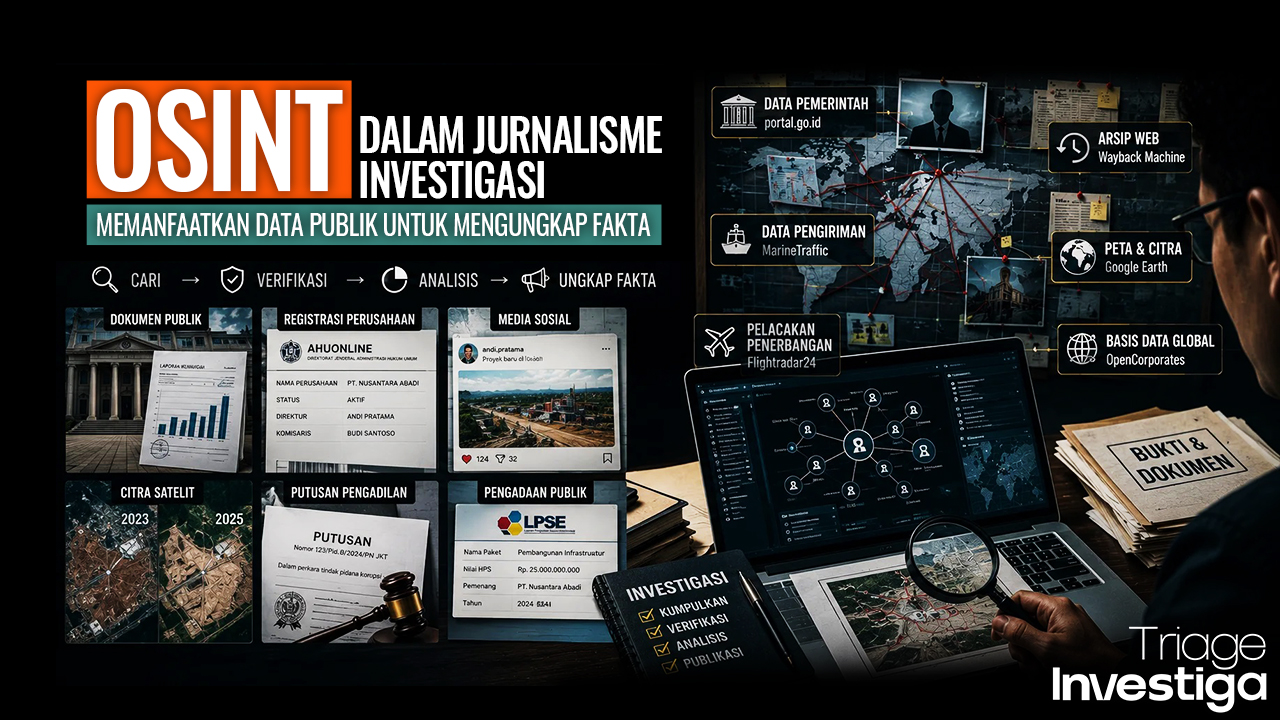
OSINT in Investigative Journalism: Utilizing Public Data to Uncover Facts
Digital technology has changed the way investigative journalism works through the utilization of open data or Open Source Intelligence (OSINT).
Read more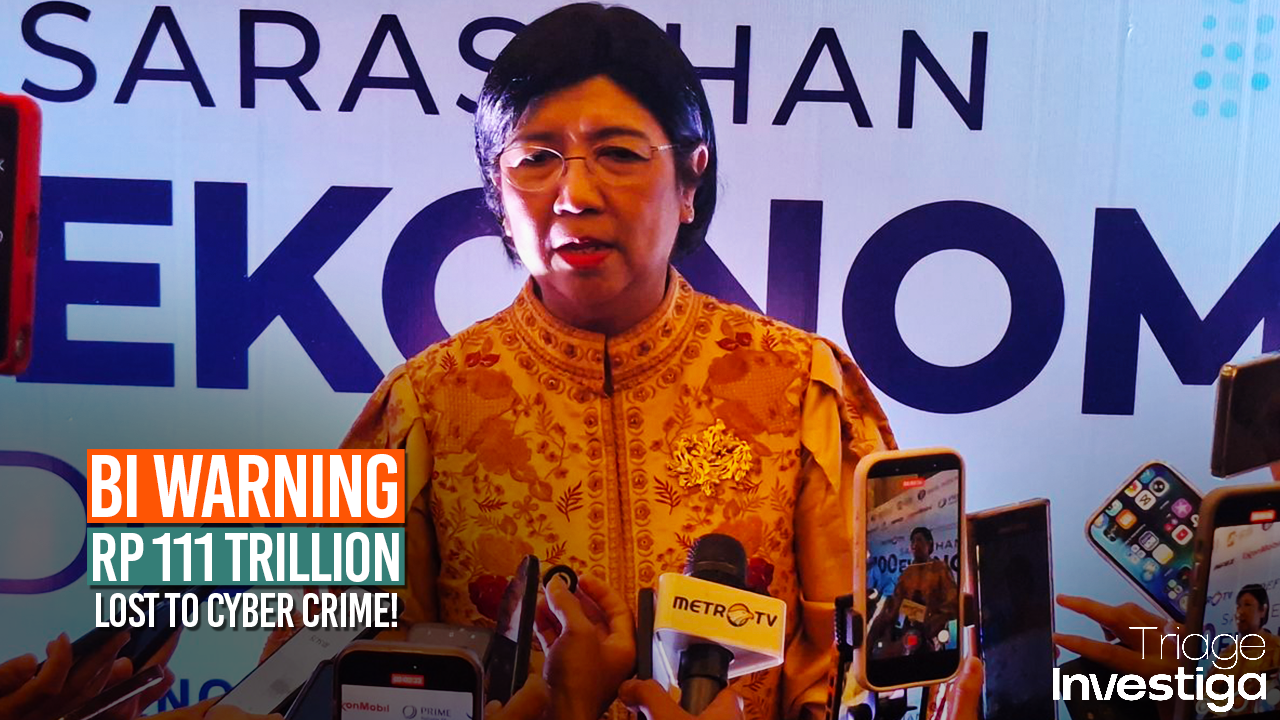
BI Reveals Cybercrimes Projected to Cost Indonesia Rp 111 Trillion
BI projects that losses due to cyber attacks in Indonesia will reach the equivalent of Rp 111 trillion. BI continues to encourage …
Read more